What is the Best Time to Sail the Banda Islands?
Updated: May 2026
What is the Best Time to Sail the Banda Islands?
- Calm seas and minimal wind for smooth passage between the islands.
- Exceptional underwater visibility, often exceeding 30 meters, ideal for diving.
- Dry, sunny weather with average air temperatures around 29-31°C.
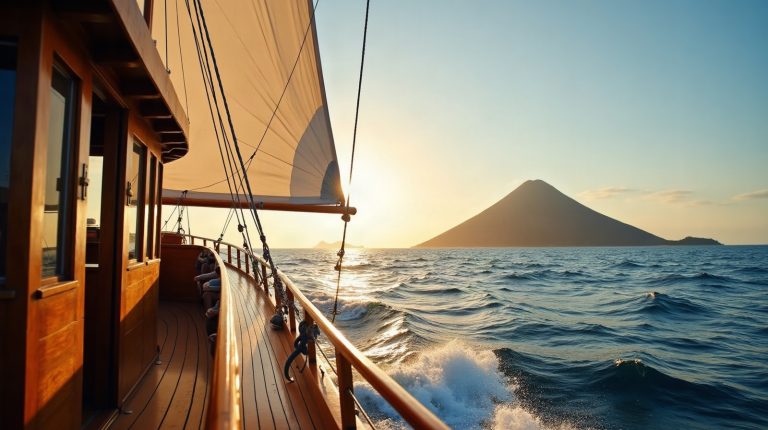
The air hangs heavy and sweet with the scent of nutmeg and clove, a fragrant ghost of the archipelago’s storied past. Below the hull of our phinisi, the Banda Sea is a sheet of deep cobalt, so placid it perfectly mirrors the conical peak of Gunung Api. This is the magic hour, not just of the day, but of the season. Timing, as any seasoned mariner will attest, is everything in these remote Indonesian waters. To truly unlock the secrets of this legendary archipelago, one must understand its rhythms, its winds, and its currents. Determining the best time to sail the Banda Islands isn’t just a matter of checking a weather forecast; it’s about aligning your voyage with the very pulse of the ocean, ensuring every moment is as perfect as this one.
Understanding the Banda Sea’s Dichotomous Climate
The Banda Sea is governed by a powerful and predictable force: the monsoon. Unlike the simple four-season calendar many of us are accustomed to, this region operates on a biannual cycle of wet and dry seasons, dictated by shifting wind patterns. Misunderstanding this fundamental rhythm is the difference between a serene voyage and a challenging ordeal. From roughly June through August, the southeast monsoon holds sway. During this period, strong, dry winds blow up from Australia, churning the sea into a formidable state with significant swells. While the skies might be clear, the sea conditions make for uncomfortable sailing and can render many of the most desirable anchorages, particularly on the southern sides of the islands, untenable. It’s a period most charter captains, including the seasoned crew of a banda islands yacht, will actively avoid for guest voyages.
Conversely, from December to February, the northwest monsoon arrives, bringing with it heavy rains and unsettled weather. While the winds might be less ferocious than their southeasterly counterparts, persistent downpours can limit opportunities for land-based exploration and reduce underwater visibility for divers and snorkelers. Annual rainfall in the region can exceed 2,000 millimeters, with the majority concentrated in this three-month window. The true art of planning a Banda Islands expedition lies in targeting the “inter-monsoon” periods. These are the sublime lulls between the winds, the moments when the sea exhales and settles into a profound calm. These windows are the key to experiencing the archipelago in its most majestic and accessible state, transforming a simple trip into a truly superlative journey.
The Prime Sailing Window: September to November
For those seeking the absolute pinnacle of conditions, the period from September through November is unequivocally the best time to sail the Banda Islands. This is the season that graces the covers of travel magazines and fills the logs of discerning divers with memorable encounters. As the southeast monsoon recedes, the winds die down almost completely, leaving the sea exceptionally flat and glassy. This tranquility is not merely an aesthetic pleasure; it allows for effortless passage between the 11 islands of the central Banda group, from the main hub of Banda Neira to the remote volcanic outpost of Manuk. The journey becomes part of the destination, a serene glide across turquoise waters.
Beneath the surface, conditions are equally superb. Water temperatures hover at a balmy 28-29°C, but it is the clarity that is most remarkable. Visibility frequently extends to 30 or even 40 meters, creating a crystalline underwater cathedral for divers. This is also the peak season for encountering some of the area’s most sought-after marine megafauna. As our lead dive guide, Pak Hatta, explained on our last trip, “The cooler, nutrient-rich upwellings at the end of the monsoon attract the big schools.” This translates to a significantly higher chance of witnessing one of the Banda’s signature spectacles: schooling scalloped hammerhead sharks, which congregate in the deep blue off the coast of Banda Neira. It’s a spectacle that draws liveaboards and private charters from across the globe, and for good reason. On land, the weather is consistently dry and sunny, perfect for hiking up Gunung Api for its panoramic views or exploring the 17th-century Dutch colonial architecture and fortifications, a key part of their UNESCO World Heritage tentative listing.
The Shoulder Season Advantage: March to May
While the autumn months represent the peak season, the spring shoulder season from March to May offers an experience that is, in many ways, its equal. For travelers who prefer a greater sense of solitude, this window can be even more rewarding. The northwest monsoon’s rains have subsided, and the seas enter another period of calm before the southeasterly winds begin to build in June. The archipelago feels fresh and verdant after the rains, with the lush island interiors at their most vibrant. This is an excellent time for botanical exploration, tracing the history of the spice trade through the ancient nutmeg groves, where the trees are heavy with fruit.
The marine environment during these months is exceptional. The water remains warm and clear, and while the massive schools of hammerheads are less predictable than in the autumn, the reefs are teeming with life. Macro photographers will find an abundance of subjects, from pygmy seahorses to flamboyant cuttlefish. It’s a period I often recommend to clients of our Banda Islands Yacht Charter: A Luxury Voyage on the Spice Route who are keen photographers or those who simply wish to feel as if they have the entire archipelago to themselves. The ambient light is softer, and the slightly higher water levels can make for dramatic snorkeling directly off the black volcanic sands of islands like Pulau Pisang. This season provides all the necessary ingredients for a world-class voyage—calm seas, beautiful weather, and thriving reefs—but with the added luxury of fewer vessels sharing the same pristine anchorages. It feels less like a destination and more like a private discovery.
Aligning Your Voyage with Marine Megafauna Migrations
A journey through the Banda Islands is as much about what lies beneath the waves as what is on shore. For many, timing a charter is about maximizing the potential for extraordinary marine encounters. The Banda Sea is a critical corridor for cetaceans and other large pelagic species, thanks to the deep-water trenches that surround the volcanic arc, including the 7.4-kilometer-deep Weber Deep. The prime September-to-November window is not just about hammerheads. This period also coincides with the migration of various whale species. It is not uncommon for a banda islands yacht to be accompanied by pods of pilot whales or spinner dolphins during passages.
More elusive, but certainly possible, are sightings of the planet’s largest animal. Blue whales are known to use the Banda Sea as a migratory route between the Pacific and Indian Oceans. While sightings are rare and require a good measure of luck, the highest probability falls within this late-year season. According to marine biologists studying the region, their movements are tied to plankton blooms that follow the nutrient upwellings. Beyond the giants, the reefs around islands like Hatta and Ai are consistently patrolled by Napoleon wrasse, bumphead parrotfish, and several species of reef sharks. The key is communicating your wildlife priorities to your charter captain. A knowledgeable crew can tailor the itinerary to specific sites known for particular species, whether it’s the sea snake-covered slopes of Gunung Api or the manta ray cleaning stations further afield. Planning your trip around these natural events elevates it from a sailing holiday to a genuine expedition.
A Quick FAQ for the Discerning Mariner
Even with the seasons defined, specific questions often arise when planning a high-end charter. Here are a few pointed answers to common queries I receive.
Is there a “bad” time for land-based cultural tours?
While the primary sailing seasons are best, the cultural and historical sites on Banda Neira are accessible year-round. However, during the peak of the wet monsoon (December-January), heavy downpours can make exploring the forts and plantations a damp and muddy affair. The trails for hiking Gunung Api can also become slippery and more hazardous. For the best land experience, stick to the dry months within the ideal sailing windows.
How much do water temperatures and visibility really vary?
The variation is significant enough to impact your experience. Water temperatures remain relatively stable, ranging from a low of 26°C during the southeast monsoon to a high of 30°C in the inter-monsoon periods. The real difference is visibility. During the calm seasons (Sep-Nov, Mar-May), it can consistently be 30+ meters. In the rainy season, runoff from the islands can reduce this to 10-15 meters in some areas, and rough seas in the windy season churn up sediment with a similar effect.
What about the risk of cyclones or major storms?
The Banda Islands lie just south of the equator, at a latitude of approximately 4.5° S. This places them outside the primary cyclone belt of the Pacific. While the monsoon seasons bring strong winds and squalls, true cyclonic storms are extremely rare in this specific part of Indonesia, making it a structurally safe region for year-round habitation, a fact confirmed by Indonesia’s official tourism authority, Wonderful Indonesia. The primary concern for mariners is not cyclone-force winds but the persistent, high-speed monsoon winds that create difficult sea states.
The Historical Context: Sailing in the Wake of Spice Traders
To sail these waters is to sail through history itself. For centuries, this tiny cluster of 11 volcanic islands was the only place on Earth where nutmeg and mace grew. This monopoly made them the focal point of global ambition, drawing Portuguese, Dutch, and English traders who fought violently for control. As noted in historical accounts documented across sources like Wikipedia, the value of these spices was astronomical; in the 17th century, a small quantity of nutmeg in London could purchase a townhouse. The Dutch East India Company (VOC) eventually secured a brutal monopoly, building a network of imposing forts like Benteng Belgica on Banda Neira, which still stands guard today.
Understanding this history enriches the journey immeasurably. When you sail into the protected harbor of Banda Neira, you are tracing the exact route of spice-laden galleons. When you anchor off the coast of Pulau Run, you are floating above the island that was famously traded with the British for Manhattan in 1667. The best time to sail the Banda Islands is also the best time to connect with this past. The clear, dry weather of the inter-monsoon periods is ideal for walking the battlements of the Dutch forts, exploring the “perkenier” plantation estates, and contemplating a history that shaped the modern world. Your voyage on a luxury phinisi is a stark contrast to the arduous journeys of centuries past, but the winds and the currents you navigate are the very same ones they contended with, a timeless link to a world-altering quest for spice.
Choosing the right time to visit the Banda Islands is the most critical decision you will make in planning your expedition. By targeting the calm, clear windows of March-May or September-November, you set the stage for a flawless journey through a land of spice, history, and unparalleled marine biodiversity. The sea becomes your serene highway, the sky your constant companion, and the islands reveal their treasures without resistance. To begin charting your own course through this historic archipelago, explore our private charter options and curated itineraries. We invite you to contact our team to craft your perfect voyage with the Banda Islands Yacht experience.